Thriller
Audiobooks Like The Housemaid

If you finished The Housemaid in a weekend, start here.
What makes The Housemaid work: midpoint twist that rewrites the first half, one flat, unhurried voice that hides the twist, and domestic power imbalance. Every pick on this list shares at least one.
All 10 picks at a glance
| # | Title | Author | Narrator | Runtime | Listen |
|---|---|---|---|---|---|
| 1 | Listen for the Lie | Amy Tintera | January LaVoy & Will Damron | 9h 18m | Listen → |
| 2 | None of This is True | Lisa Jewell | Nicola Walker, Louise Brealey & Ben Bailey Smith | 10h 31m | Listen → |
| 3 | Verity | Colleen Hoover | Vanessa Johansson & Amy Landon | 8h 10m | Listen → |
| 4 | The Silent Patient | Alex Michaelides | Jack Hawkins & Louise Brealey | 8h 33m | Listen → |
| 5 | Behind Closed Doors | B.A. Paris | Georgia Maguire | 8h 40m | Listen → |
| 6 | Rock Paper Scissors | Alice Feeney | Richard Armitage & Stephanie Racine | 10h 38m | Listen → |
| 7 | The Perfect Marriage | Jeneva Rose | Mozhan Navabi & Andrew Eiden | 8h 48m | Listen → |
| 8 | The Last Mrs. Parrish | Liv Constantine | Suzanne Elise Freeman & Meghan Wolf | 12h 0m | Listen → |
| 9 | The Wife Between Us | Greer Hendricks & Sarah Pekkanen | Julia Whelan | 11h 30m | Listen → |
| 10 | The Push | Ashley Audrain | Marin Ireland | 8h 38m | Listen → |
What made The Housemaid work on audio
Lauryn Allman holds the Housemaid audiobook together. Millie's chapters could have gone wrong easily. Allman keeps her voice plain and a little tired, like someone explaining a job to a coworker. The early sections sound almost dull. That's the point. When the midpoint hits and Millie turns out to be different than she's been letting on, Allman doesn't change anything. The voice is the same. You're the one who's wrong.
We picked these for the audio first. Most are domestic thrillers with the twist roughly where Housemaid puts its twist. A few have dual narration. A few don't. The last one is for the listener who wants the same unreliable narrator at a slower, literary pace.
The picks · 1–10
Ten thrillers, ranked editorially.
We listened to all of them.

Listen for the Lie
Best for the listener who wants Housemaid's twist energy with a fresh premise.
Why it matches: Same kind of trick as Housemaid, with an unreliable narrator and a midpoint that makes you go back and reread chapter one. The frame is a true-crime podcast instead of a job interview.
Lucy Chase comes back to her Texas hometown five years after her best friend was murdered. Lucy has no memory of the night. The whole town thinks she did it. A true-crime podcaster shows up to find out, and Lucy agrees to be on the show.
The book runs the same kind of move Housemaid runs: a woman who can't trust her own story, told in two voices, with a midpoint that makes you go back and reread chapter one in your head. If you finished Housemaid wanting another one like it, start here.
January LaVoy is one of the best narrators working. She gives Lucy a defensive, tired, slightly bored quality, which is how a person who's been suspected of murder for five years would actually sound. Will Damron's podcaster is the right kind of guy: not crusading, not preachy, just running a show. The two voices do most of the work the book asks of audio.

None of This is True
Best for the listener who came for the manipulation and stayed for the podcast-era dread.
Why it matches: Same question Housemaid puts in front of you for three hundred pages: which one of these women is dangerous, and which one is the cover story.
A podcaster meets her 'birthday twin' in a London pub: same date, same year, same restaurant. She agrees to put her on the podcast. The subject moves into her house. The podcast becomes the way the wheels come off.
Jewell builds the whole book around the question Housemaid keeps in front of you for three hundred pages: which of these women is dangerous, and which one is the cover story. She holds that question for a long time without resolving it.
Nicola Walker, who you'd know from Unforgotten, plays the podcaster like she's already half-decided the woman is lying. Every question sounds like she's holding the follow-up in her teeth. Louise Brealey makes the subject too forthcoming, too willing to please. You can hear the lie in the openness. Same dual-narrator move Housemaid uses, just with British accents and better diction.

Verity
Best for the listener who wants the most-talked-about twist in modern thrillers.
Why it matches: Closest analog on this list for the 'what I just heard cannot possibly be true' moment in Housemaid.
Hoover's only real thriller, and the one Housemaid readers move to first. A broke writer takes a ghostwriting job for a famous author who's in a coma. She goes to the author's house to read her notes. In the back of a desk drawer, she finds an unpublished autobiography. The story it tells is awful.
Whether any of it is true is the rest of the book. Same shock-value move as Housemaid, with a darker, gothier paint job.
Amy Landon handles the framing chapters straight. The interesting work is Vanessa Johansson reading the autobiography. She delivers the most disturbing passages in the book like she's reading off a grocery list. That flatness is what makes Verity work on audio. In print you can speed-read past the worst lines. Johansson makes you sit there.
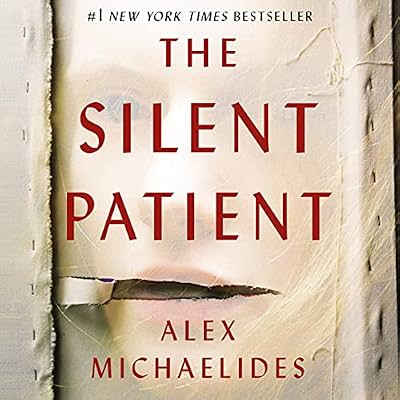
The Silent Patient
Best for the listener whose first thought after Housemaid was 'okay, what else does this.'
Why it matches: Same final-act flip Housemaid pulls. Setup is closer to therapist-and-patient gaslighting than employer-and-employee.
A woman shoots her husband five times in the face. After that she doesn't speak. A therapist becomes obsessed with making her talk. The setup is closer to gaslighting than domestic noir, but the final-act flip is exactly the kind of move Housemaid pulls.
This was the thriller everyone in publishing was reading in 2019. You've probably already read it. The audio is worth a second pass.
Jack Hawkins gets Theo's slow-build paranoia exactly right. He should have tipped into melodrama by chapter six. He never does. Louise Brealey reads Alicia's diary entries flat, with no real affect, which is the closest thing audio can do to her actual silence. The two voices working against each other are what make the back half tense.

Behind Closed Doors
Best for the listener who wants the purest version of Housemaid's marriage-as-trap premise.
Why it matches: Same domestic trap as Housemaid, played straight without the midpoint POV flip.
This one runs the closest version of Housemaid's premise. Picture-perfect couple. The husband is a monster. Grace narrates her own captivity in real time, trying to plan an escape while keeping up the act in front of her sister, her friends, her in-laws.
No midpoint flip here. The dread is steady all the way through. If you wanted Housemaid's claustrophobia without the trick at the middle, this is the pick.
Georgia Maguire reads Grace as someone performing brightness for the dinner-party crowd inside the book. When the performance cracks, you hear it, but only just. Maguire never overplays the breakdown. The whole audio works on the thin gap between Grace performing and Grace surviving.
A note on the narrator
The voice that made The Housemaid binge-worthy
Lauryn Allman
Narrator
What Allman does well is the plainness. Millie's chapters are written as the interior monologue of a woman barely holding it together in a job she barely understands. Allman reads them like Millie is calm. She isn't. You're supposed to notice the gap, and you do, but you don't notice Allman doing anything to make it visible. When the book turns, the voice doesn't. The McFadden series leans on this and gets away with it because Allman keeps doing it.
More thrillers narrated by women
Rock Paper Scissors
Best for the listener who wants a marriage thriller with a serious narrator name behind it.
Why it matches: Marriage with secrets, played in a locked-room setting instead of a class divide. The audio is meaningfully better than the print.
A married couple drives to a converted chapel in the Scottish Highlands for an anniversary weekend. He narrates his chapters. She narrates hers. A snowstorm shuts them in. Every anniversary letter he's written her over ten years gets read aloud between chapters, and each one is more wrong than the last.
The setting is a locked room and the marriage is the puzzle. It moves slower than Housemaid. The ending is bigger.
Richard Armitage, who you'd know as Thorin in The Hobbit, narrates the husband. His voice is low and gravelly and most of what makes this audiobook work. Stephanie Racine reads the wife in a higher, more anxious counter. The casting matters here. The reveal at the end is built into the audio in a way print can't carry.

The Perfect Marriage
Best for the listener who wants the next bingeable TikTok thriller with dual narration.
Why it matches: Same kind of pacing as Housemaid: short chapters, two POVs traded back and forth, a twist every twenty pages.
A defense attorney has to represent her own husband, accused of killing his mistress. The book runs the same kind of pacing as Housemaid: short chapters, two POVs traded back and forth, a twist every twenty pages or so. The dual narration is set up almost identically.
This is the 2024 re-recording. The original audio came out earlier and was replaced.
Mozhan Navabi, from The Blacklist, plays Sarah. Andrew Eiden plays Adam. Neither of them tips their hand early. Navabi reads Sarah as a lawyer who'd rather not find out what she already knows. Eiden plays Adam earnest enough that you'll spend the book second-guessing him. Holding two voices distinct for nine hours is harder than it sounds. They pull it off.

The Last Mrs. Parrish
Best for the listener who wants Housemaid's exact midpoint POV flip again.
Why it matches: Same Part 1 / Part 2 inversion Housemaid runs at the midpoint, just stretched over twelve hours instead of nine.
The closest structural cousin to Housemaid on the list. Part One follows Amber, a social-climber working her way into a wealthy family she wants to take apart. Part Two flips to Daphne, the wife she's been targeting, and tells you that everything in Part One was a lie.
Same midpoint POV flip. The book built its reputation on this move, and the move still works.
Suzanne Elise Freeman plays Amber cold and calculating from the first sentence. She doesn't try to sell you the charm Amber is performing for everyone else inside the book. You hear the math. Meghan Wolf reads Daphne tired, which is the right read for who Daphne turns out to be. The two voices are different enough that when the flip happens you know it without anyone having to explain it.

The Wife Between Us
Best for the listener who wants whitelist-grade narration on a canonical twist setup.
Why it matches: Same bait-and-switch midpoint reveal. An earlier book in the same vein.
First half tells you one story. The midpoint tells you it was a different story the whole time. If you're coming from Housemaid, you'll recognize the move within the first thirty minutes.
The story is thinner than most of the others on this list, which is why it's at nine. Julia Whelan is the reason it's here at all.
Julia Whelan reads the early chapters with a slight unsteadiness, just enough that something feels off without you being able to say what. At the midpoint, when the same voice has to mean something different, she doesn't change anything obvious. You realize you were the one being manipulated. Whatever the book's other problems, the audio is among the best on this list.

The Push
Best for the listener who wants Housemaid's unreliable narrator recast as literary fiction.
Why it matches: Same kind of trust problem Housemaid puts in front of you, told slower and in second person.
A mother becomes convinced her daughter is wrong. Maybe dangerous. Maybe capable of really hurting someone. Her husband doesn't see it and won't talk about it. The whole book turns on whether you should believe the mother, which is the same kind of trust problem Housemaid puts in front of you.
Because the pace is slower and more interior, most Housemaid readers would skip right past it on their own. That's why we put it on as the discovery pick.
Marin Ireland is more narrator than this list needs and the book is the better for it. The whole thing is written in second person, Blythe writing to her husband. Ireland reads it like she's presenting a deposition. Calm. Procedural. When Blythe contradicts herself, Ireland doesn't pause for it. You catch it on your own. That's the whole performance, and it's the reason this pick is here.
Frequently asked questions
Frequently asked questions
What audiobook is most like The Housemaid?
Listen for the Lie by Amy Tintera, narrated by January LaVoy and Will Damron. It does the same thing Housemaid does: a woman who can't trust her own story, told in two voices, with a midpoint that makes you go back and reread chapter one in your head. If you finished Housemaid in a weekend, this is what to do next.
Is The Housemaid worth listening to as an audiobook rather than reading?
Yes. Lauryn Allman's performance is a big part of why the book works. She reads Millie plainly, almost dully, which is the right read for the first half. At the midpoint she has to make the same voice mean something different, and she does it without changing anything you can put your finger on. The audio version is the one to start with.
What should I read next by Freida McFadden after The Housemaid?
The series continues with The Housemaid's Secret (book 2) and The Housemaid is Watching (book 3), both narrated by Lauryn Allman. A fourth book is on the way. Outside the series, The Teacher is the McFadden standalone closest to Housemaid in shape: dual POV, short chapters, domestic trap, but set inside a high school instead of a house. Leslie Howard and Danny Montooth share the narration.
Are all of these audiobooks thrillers?
Mostly. Nine of the ten are clear domestic-noir thrillers. The exception is the discovery pick at #10, The Push by Ashley Audrain, which is a literary novel about an unreliable narrator. It runs the same kind of trust problem Housemaid runs, but slower and in second person. If you want to stay in the bingeable thriller lane, the first nine are it.
Which pick has the shortest runtime?
Verity is the shortest at 8 hours 10 minutes. The Silent Patient (8h 33m), The Push (8h 38m), and Behind Closed Doors (8h 40m) are all under nine hours. The Last Mrs. Parrish is the longest at twelve hours. It's also the pick that does the most direct version of Housemaid's midpoint flip.
How do you decide what goes on a list like this?
We listen to every candidate ourselves and judge the audio first, the story second. After that we score on scenario match (domestic noir with a twist, for this list), pacing, runtime, and whether the comparison to Housemaid is something a listener would actually feel. Order is decided by editors.
New to Audible? Start your free 30-day trial →
How we picked
How we picked these 10
Narration first. We listen to every candidate ourselves and rank for the audio experience, not the story. A book that's mediocre in print can be excellent on audio if the narrator is doing the work. A book that's strong in print can come out flat if the production is wrong. We're judging the audiobook.
After narration we score for scenario fit. The seed profile here is domestic noir with a twist that rewrites the first half. The list is anchored by books that fit that profile exactly, though we threw in a few that hit it from a different angle so the list doesn't read the same all the way through. The pick at #10 is on purpose at the edge of the genre.
Order is editorial, not algorithmic. We argued.