Fantasy
Audiobooks Like Mistborn

If Michael Kramer reading a burn of steel as plain fact is what kept you locked into all 24 hours, this list starts there.
What makes Mistborn: The Final Empire work: a rebel crew pulling a heist against an empire, a hard magic system with real, learnable rules, and an uprising led from the streets up. Every pick on this list shares at least one.
All 10 picks at a glance
| # | Title | Author | Narrator | Runtime | Listen |
|---|---|---|---|---|---|
| 1 | The Way of Kings | Brandon Sanderson | Michael Kramer & Kate Reading | 45h 30m | Listen → |
| 2 | Red Rising | Pierce Brown | Tim Gerard Reynolds | 16h 12m | Listen → |
| 3 | Foundryside | Robert Jackson Bennett | Tara Sands | 19h 34m | Listen → |
| 4 | The Lies of Locke Lamora | Scott Lynch | Michael Page | 22h 36m | Listen → |
| 5 | The Will of the Many | James Islington | Euan Morton | 28h 14m | Listen → |
| 6 | The Black Prism | Brent Weeks | Simon Vance | 21h 26m | Listen → |
| 7 | The Rage of Dragons | Evan Winter | Prentice Onayemi | 16h 15m | Listen → |
| 8 | Promise of Blood | Brian McClellan | Christian Rodska | 19h 01m | Listen → |
| 9 | The Blade Itself | Joe Abercrombie | Steven Pacey | 22h 15m | Listen → |
| 10 | The Fifth Season | N. K. Jemisin | Robin Miles | 15h 27m | Listen → |
What keeps Mistborn listeners hooked
Michael Kramer makes Mistborn feel bigger than the page. He narrates The Final Empire the way you would want a heist told to you: patient with Vin's mistrust, quick when the crew starts moving, and never once showing off over the top of Sanderson's clockwork magic. Allomancy only lands on audio if the narrator trusts the rules, and Kramer never overexplains a burn of steel or a coin thrown.
What sends listeners back to the shelf is the machinery underneath: a rebel crew, a cruel empire, and a magic system with real, learnable physics. The picks below match those nerves to varying degrees, ranked by how completely each recording recreates the feeling, with narration weighted highest in the scoring model. Every pick shares at least one of Mistborn's three engines: the heist, the uprising, or the hard magic.
Two honest notes before you start. A couple of picks wear a different skin over the same engine, so the nearest rebellion twin is dystopian sci-fi rather than fantasy, and the copy says so. And tone varies: The Blade Itself runs far grimmer than Sanderson, while The Fifth Season is darker and more literary. Where a recording diverges, the pick tells you plainly so you can skip ahead if that is not what you came for.
The picks · 1–10
Ten, ranked by how close they get to Mistborn.
Order reflects how completely each recording recreates the experience, with narration weighted highest.

The Way of Kings
Best for the listener who just wants more Sanderson, deeper.
Why it matches: Same author and same narrator, with magic engineered down to the rules just like Allomancy.
The obvious next step, and the right one. You get the same author, the same appetite for a magic system engineered down to the rules, and the same narrator carrying you into it. Stormlight is a slower, heavier build than Mistborn, so treat this as the deep-end pick rather than a quick fix.
Kramer splits the cast with Kate Reading the way they do across all of Sanderson's epics, extending the Mistborn voice without a seam. He keeps Kaladin's despair from tipping into melodrama, exactly the kind of restraint that made his Vin work.

Red Rising
Best for the class fury under Kelsier's plan, turned up loud.
Why it matches: Mistborn's spine in a sci-fi skin: a lowborn infiltrates the ruling caste to burn it down from inside.
This is Mistborn's spine wearing a sci-fi skin: a low-born character infiltrates the ruling caste to burn it down from the inside. The class fury that runs under Kelsier's plan is the whole engine here, just turned up loud. It is shorter than most fantasy on this list, and it moves.
Reynolds narrates Darrow with a low gravel that hardens as the rage builds, allowing the performance to escalate alongside the story. He never rushes the quiet scheming, then floors it when the Institute turns violent.

Foundryside
Best for the heist plus a gameable magic system.
Why it matches: The closest DNA: a thief, a programmable magic system with strict rules, and an oligarchy to topple.
The closest thing to Mistborn's actual DNA on this list. Sancia is a thief pulling a high-stakes heist, scriving is a programmable magic system with strict, gameable rules, and the enemy is a merchant-house oligarchy that owns the city. Heist plus systemic magic plus fighting the powerful. It is the Kelsier crew from a different angle.
Sands keeps perfect pace with a plot that runs on cleverness, landing Sancia's wry interior voice without slowing down to signpost the jokes. She handles the magic-code exposition cleanly, which is the whole ballgame in a hard-magic heist.

The Lies of Locke Lamora
Best for the crew, the con, and the banter.
If what you loved was the crew dynamic, this is your pick. Con artists, an elaborate long game against the people who run the city, and the sharp banter that makes you care when the plan goes sideways. It is the charm half of Mistborn's soul: all Kelsier, no Lord Ruler.
Page relishes the Gentleman Bastards' filthy back-and-forth, giving Locke and Jean voices distinct enough that you never lose track mid-argument. His dry timing is the reason the caper reads as fun before it turns to tragedy.
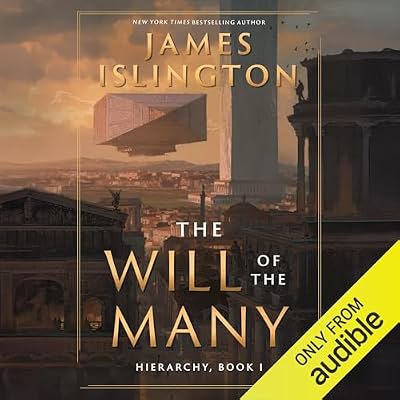
The Will of the Many
Best for rebellion against an empire and a hidden identity.
Rebellion against an empire, a hero hiding his true identity, and a rigid systemic magic, the Hierarchy, where people cede their will up a human ladder of power. Islington builds the oppression directly into the machinery of the world, much like Sanderson builds it into Allomancy and the Final Empire.
Morton is a stage actor, and it shows in how tightly he controls Vis's guarded, first-person perspective. Everything is held back, nothing leaks early. That restraint keeps the mystery of Vis's past intact for hours longer than a showier read would allow.

The Black Prism
Best for the hard, rule-bound magic physics.
Chromaturgy is about as rule-bound as magic gets, drafting light into physical substance with hard limits and a real cost. If the physics of Allomancy pulled you in, Weeks scratches the exact same itch. Add empire-scale politics and a morally slippery cast, and it sits right next to Mistborn.
Vance narrates a large cast with crisp, patrician diction and never blurs two speakers, a massive asset in a series this politically crowded. He keeps the color-magic mechanics completely legible without ever sounding like he is reading a technical manual.
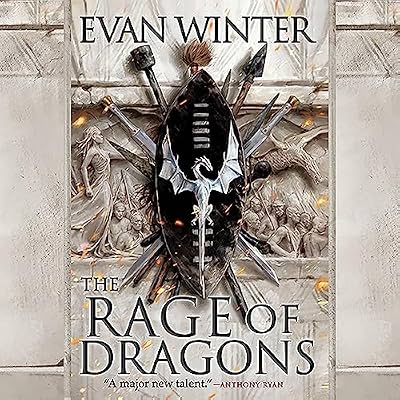
The Rage of Dragons
Best for the revenge grind and weaponized rules.
A rigid caste system, a hero who weaponizes the rules to climb it, and a war he intends to turn. The revenge drive here is closer to Kelsier's than almost anything else on the shelf. Winter's magic is martial and disciplined, making the entire listen lean and fast.
Onayemi narrates with a propulsive, near-rhythmic cadence that matches the book's war chants and battle drills. He carries the Xhosa-inspired names and terms with an organic authority that makes the world feel lived-in rather than looked-up.

Promise of Blood
Best for the truest spiritual match: revolution and hard magic.
Why it matches: Revolution plus a hard, escalating magic system, from a writer Sanderson trained.
The discovery pick, and arguably the truest spiritual match on the list. A revolution topples a monarchy in the opening pages, gunpowder mages burn powder the way Mistborn's crew burn metals, and the magic runs on clear, escalating rules. McClellan studied under Sanderson, and you can hear the lineage in the world-building. You just will not find this on the obvious also-bought algorithms.
Rodska is a veteran British actor with a gruff gravitas that grounds the grimy, boots-on-cobblestones revolution. His field-marshal register gives the character of Tamas the exact weight the coup needs.

The Blade Itself
Best for the politics and the morally gray crew.
For the politics and the morally gray crew, with one warning: Abercrombie is grimmer and more cynical than Sanderson. Where Mistborn keeps hope on the table, the First Law trilogy mostly takes it off. If you came for scheming, torturers, and characters you will love against your better judgment, this is the one.
Pacey is the reason audiobook listeners treat this trilogy as the absolute gold standard for dark fantasy performance. His interpretation of Glokta, all sardonic inner monologue and physical pain, is a masterclass. It is worth starting the book for that voice alone.
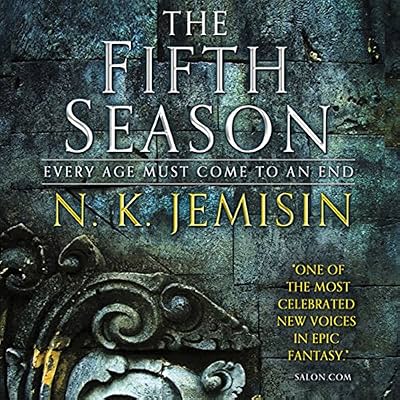
The Fifth Season
Best for the uprising, darker and more literary.
Orogenes are an oppressed magic-caste held down by a brutal empire, and the story tracks their rebellion against a system built to control them. This is Mistborn's uprising rendered darker and more literary. Fair warning: it is told partly in the second person across braided timelines, so it asks a bit more of the listener.
Miles threads the second-person present tense and the shifting timelines without ever losing the listener. It is a genuinely difficult narration problem solved cleanly. Her Essun holds grief and steel in the exact same breath.
About the narrator
Michael Kramer and the invisibility trick
Michael Kramer
Mistborn's anchor voice · the sound of modern epic fantasy
Kramer has been the voice of doorstop epic fantasy for decades, most famously splitting The Wheel of Time and Sanderson's Cosmere with Kate Reading. His gift is invisibility: he disappears into the material instead of performing on top of it. On Mistborn, that discipline is why the magic works on audio. He reads a burn of pewter or a Mistborn's leap as plain fact, never as cheap spectacle, and trusts Sanderson's rules to carry the awe. Every pick here was chosen with that restraint as the reference point.
Adjacent shelves
If Mistborn is the starting point
Where the Final Empire's listeners tend to cross over next.
Frequently asked questions
FAQ: Audiobooks Like Mistborn
What audiobook is most like Mistborn?
Foundryside is the closest on DNA. A thief pulls a high-stakes heist, the magic is a programmable system with strict rules, and the enemy is a merchant-house oligarchy that runs the city, which is the Kelsier crew from a different angle. If you want the same rebellion turned up loud, Red Rising is the other top pick, with Tim Gerard Reynolds narrating a lowborn who infiltrates the ruling caste to burn it down.
Are there audiobooks like Mistborn by Brandon Sanderson himself?
Yes. The Way of Kings opens the Stormlight Archive and is narrated by the same team, Michael Kramer and Kate Reading. It is a slower, heavier build than Mistborn, so treat it as the deep-end pick, but it runs on the same hard, engineered magic and the same voice that made the Final Empire work.
Which picks have a hard, rule-based magic system like Allomancy?
Foundryside's scriving, The Black Prism's chromaturgy, and Promise of Blood's powder magic are all rule-bound systems with real limits and real costs. If the physics of Allomancy is what hooked you, start with those three.
Which pick is the discovery, and is it worth it?
Promise of Blood by Brian McClellan. A revolution topples a monarchy in the opening pages, gunpowder mages burn powder the way Mistborn's crew burn metals, and McClellan actually studied under Sanderson. It rarely surfaces on the obvious also-bought trail, which is exactly why it is here.
Which pick is shortest, and where should I start?
The Fifth Season is the shortest at 15 hours 27 minutes, though it is the most demanding. For the fastest payoff on the core premise, start with Red Rising at 16 hours 12 minutes. To simply keep going with Sanderson, start with The Way of Kings.
New to Audible? Start your free 30-day trial →
How we picked
Selection criteria
We scored each candidate before ranking it. The question driving every pick was whether the recording would satisfy the listener who finished Mistborn and immediately wanted more. Narration quality was weighted highest in the model, so same-scenario matches with weak narration were cut. Picks one through three are the closest to the seed. Picks four through seven are strong on scenario or narration with some variation in tone. The discovery pick, Promise of Blood, is a title the algorithm would not surface for this listener, and it earns its place by broadening the map without breaking the cluster.
Two notes on composition. The nearest rebellion twin, Red Rising, is dystopian sci-fi rather than fantasy, kept high because scenario match outranks genre when the fit is this exact. And tone varies: The Blade Itself runs grimmer and more cynical than Sanderson, while The Fifth Season is darker and more literary. Where a recording diverges from the seed, the pick copy says so plainly rather than hiding it.